
Meet artist in residence, Janavi Kramer
Ocean Artist, Scientific Illustrator, and Storyteller. Meet Janavi Kramer, Watergate Bay's 2026 Artist in Residence.
Janavi joined us to celebrate World Oceans Day (8 June). Over the weekend, she sketched and painted around the hotel and along the shoreline, drawing inspiration from our rich coastal biodiversity and ever-changing marine environment.
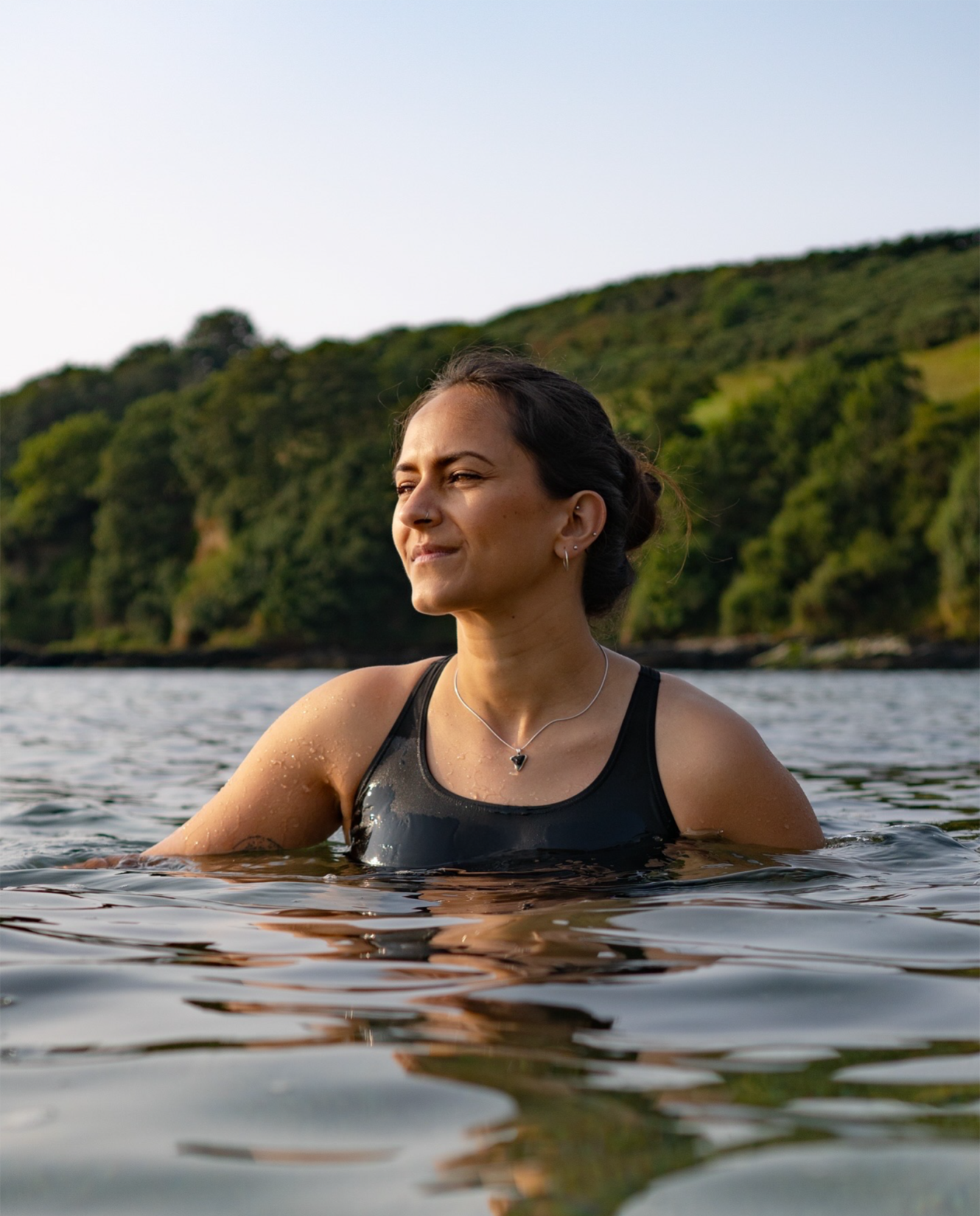
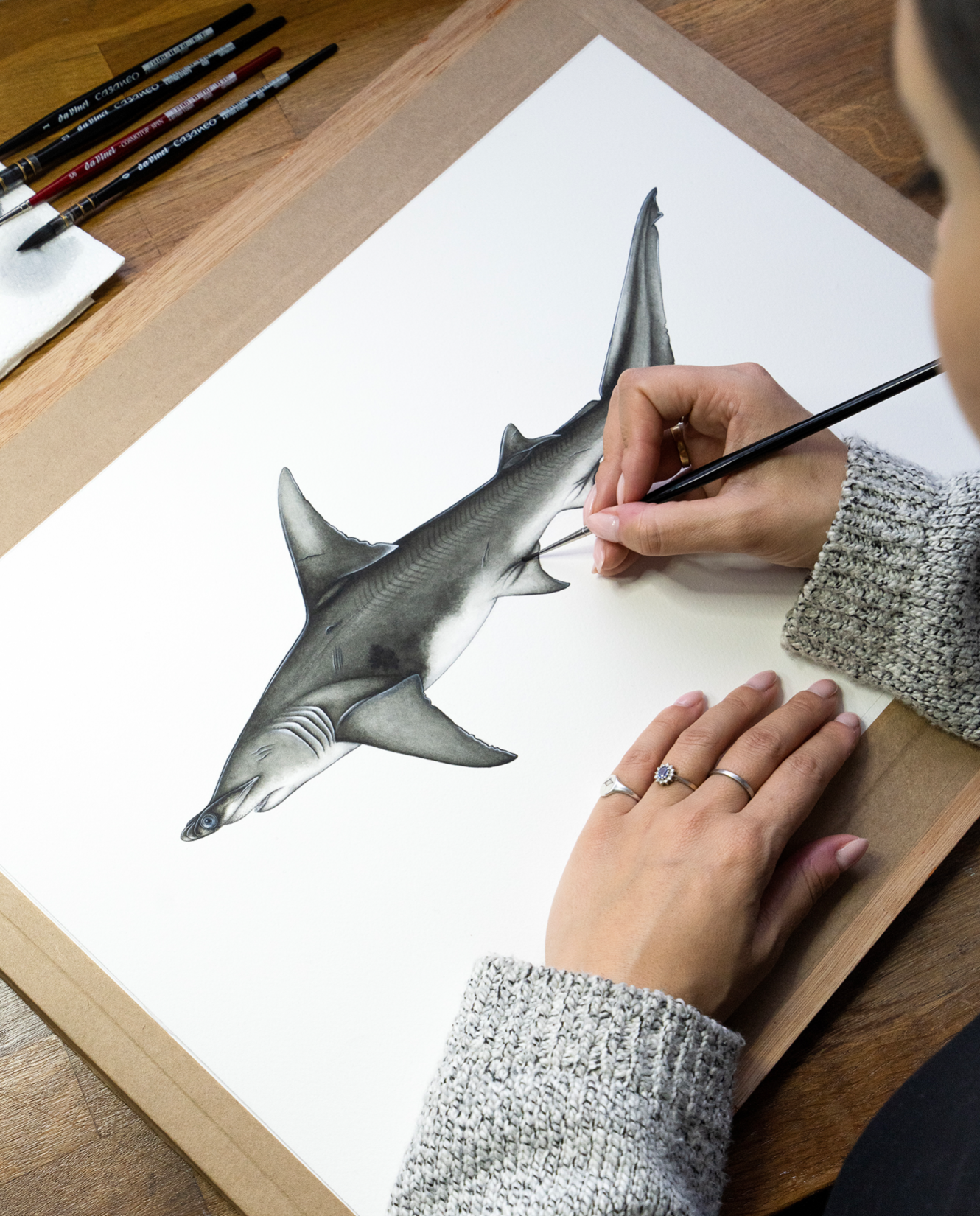
From the stage to the sea, ocean artist Janavi Kramer has transformed her passion for storytelling into a celebration of marine life - expressed through exquisitely detailed, scientifically inspired illustrations.
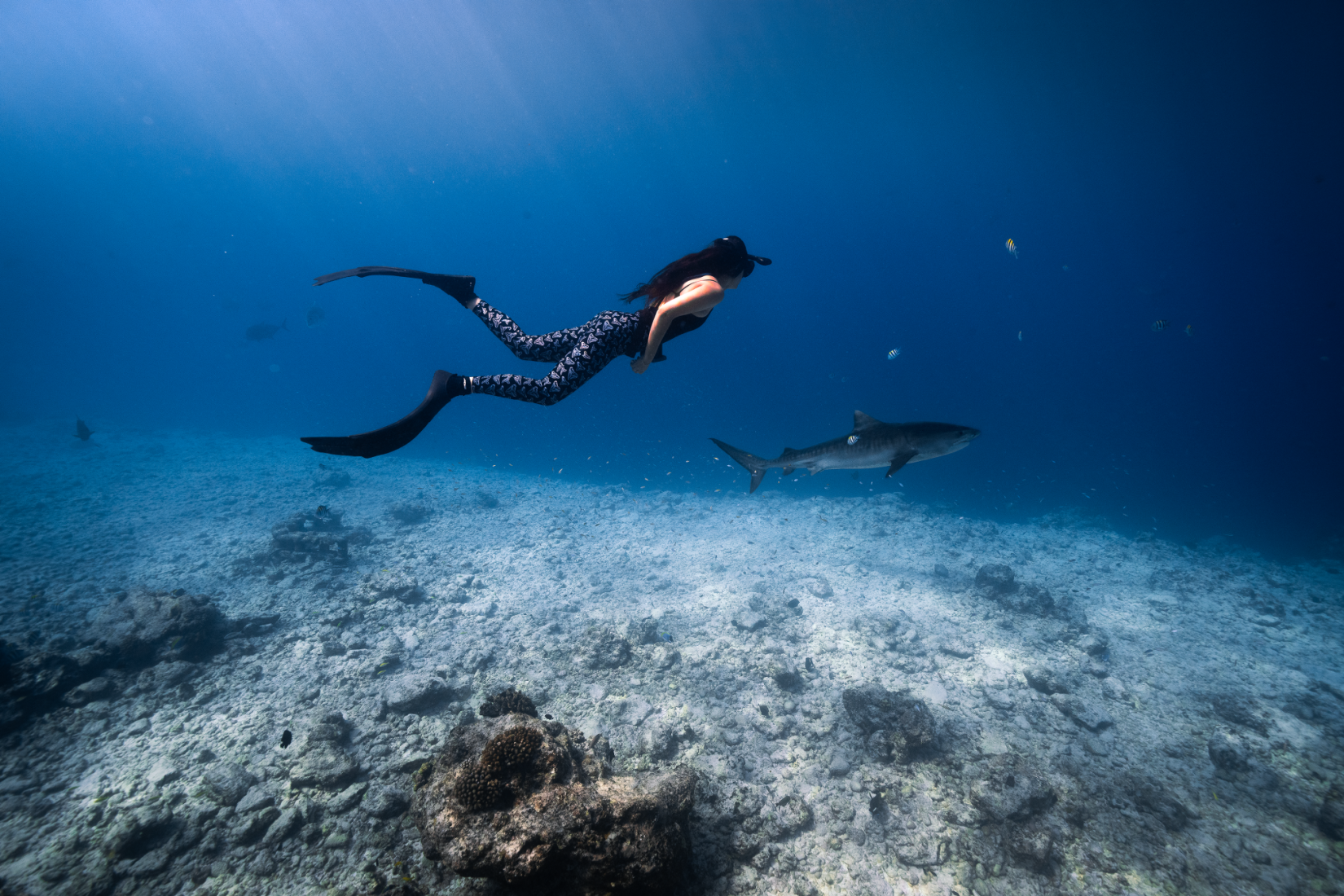
Often found diving just off the shores of Falmouth, weaving through kelp forests and encountering species like catsharks and cuttlefish, Janavi draws direct inspiration from the underwater world she seeks to protect. We caught up with her back on dry land ahead of her summer residency at Watergate Bay to talk about her journey into diving, why rockpooling is important, the extraordinary wildlife found along the Cornish coast, and her ongoing mission to inspire a deeper love - and protection - of our ocean.
Diving in...
Diving played a pivotal role in shaping my journey as an ocean artist and scientific illustrator. My background is actually in theatre and storytelling, so creativity has always been at the heart of what I do - just in a different forms.
But 13 years ago, it all shifted quite unexpectedly from the stage to a paintbrush. One day at university, a friend suggested I try diving because of my obsession with the ocean. Out of curiosity, I looked it up and discovered there was a dive centre just ten minutes down the road! It was the middle of December - not exactly the most inviting time to start - but something about it felt too exciting to ignore, so I booked onto a course that very weekend.
Back then, my nearest diveable open body of water was a very murky, cold lake next to Heathrow Airport – quite a contrast from what you see on David Attenborough documentaries! It was unbelievably cold - almost enough to put me off entirely. On my first dive, the visibility was so poor I couldn’t even see my hand in front of my face. But I pushed through those early, murky experiences, and it ultimately opened the door to something much bigger. Diving became a gateway to a whole new world - one that has since inspired me to travel, explore, and connect with the ocean in ways I never imagined.
Fast forward over a decade later, and I have now been invited to become an ambassador for PADI, the world’s largest scuba diving organisation. It’s something I’m incredibly proud of - diving has always been my first love, and it feels like a real full-circle moment to now contribute to a community that has given me so much.
There's something so unique about the experience of going underwater. As soon as you dive below the surface, the rest of the world falls silent and you’re fully present in that moment; listening to your breath and taking in the wonders of the underwater environment.
“As soon as you dip below the surface, the rest of the world just cuts out and you’re fully present in that moment; listening to your breath and taking in the wonders of the underwater environment.”
Protecting our oceans…
We’re incredibly lucky to have such rich marine biodiversity here in the UK, and it’s something I feel really passionate about showcasing through my work. Before I started diving, I had no idea just how vibrant and alive our underwater environments are - I think there’s a common misconception that there isn’t much to see here, but the reality couldn’t be more different.
You can be just metres from the shore, in only a couple of metres of water, and find yourself immersed in thriving kelp forests, surrounded by species like catsharks, nursehounds, jellyfish, octopus, and cuttlefish. These ecosystems are dynamic, intricate, and full of life - and yet so often overlooked.
Whenever I share these experiences with friends and family, there’s always a sense of disbelief. It completely shifts their perception of what exists on our own coastline. And I think that’s where the power lies - because once people realise what’s right on their doorstep, that sense of wonder can quickly turn into a desire to protect it.
You don’t have to be a diver to experience the ocean or appreciate its beauty and importance. Snorkelling and even something as simple as rockpooling are incredibly accessible ways to connect with our coast.
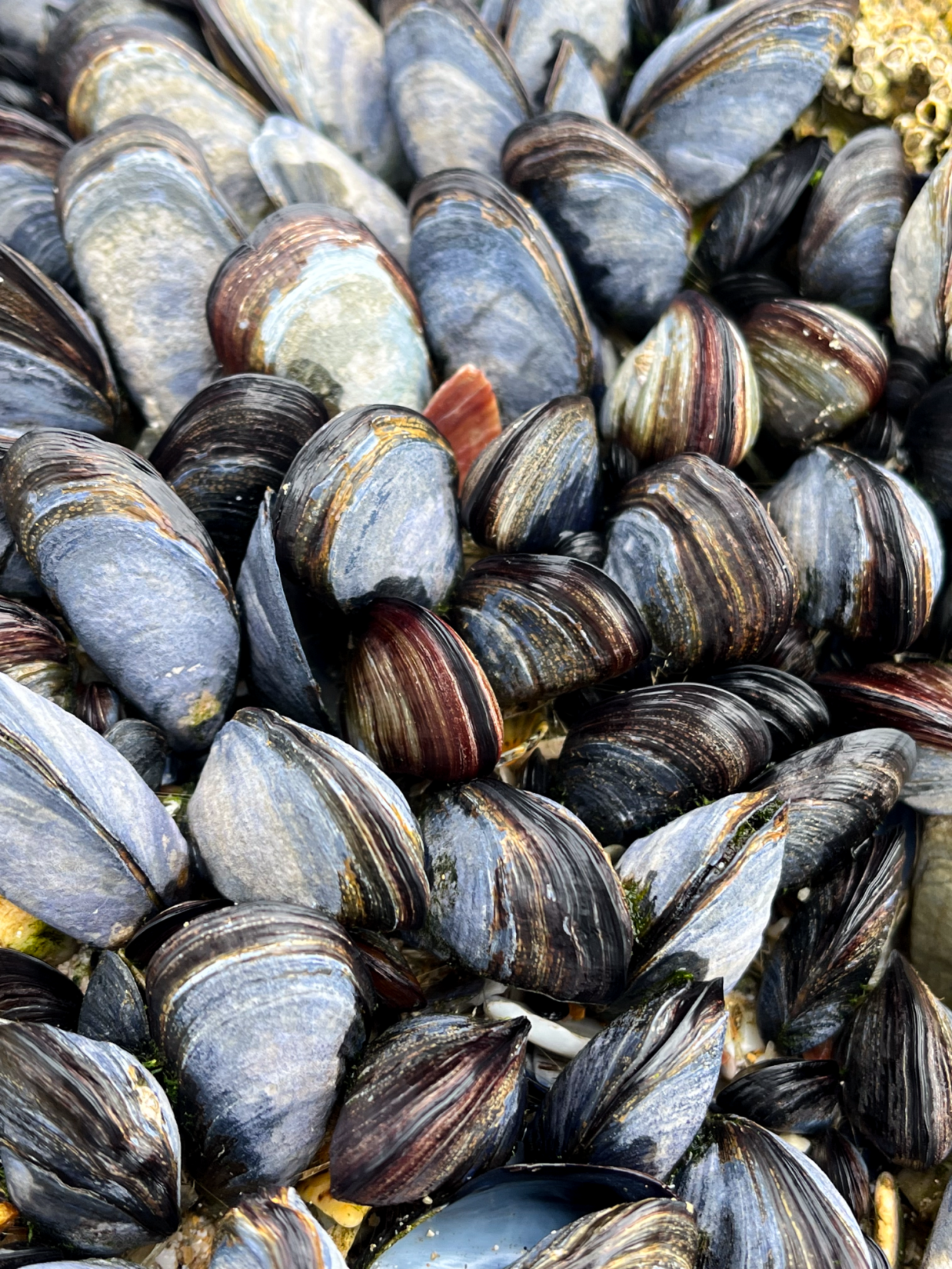
Rockpooling, in particular, invites you to slow down and really look - to be present in a way we often aren’t. Within these small, temporary worlds, you’ll find an extraordinary diversity of life: different species, colours, textures, and behaviours, all coexisting in a delicate balance. They’re like miniature ecosystems, revealed only for a few fleeting hours before the tide returns and the sea quietly reclaims them. They are a reminder that even the smallest spaces in nature hold immense value, and that connection to the ocean can start with something as simple as looking a little closer, right below your feet.
With so many people drawn to Cornwall’s coastline each year, it’s more important than ever that we empower both local communities and visitors with the knowledge to protect it. By understanding how our actions impact the species that call this coastline home, we can make more mindful choices and minimise our footprint - ensuring these environments can be enjoyed not just by us, but by the wildlife that depends on them, and by future generations too.
As our oceans change due to climate change, we’re beginning to see shifts in the species appearing around UK waters. Sightings of animals like octopus, rainbow nudibranchs, and even humpback whales are becoming more frequent. While these encounters can feel incredibly exciting and special, it’s important to pause and consider the bigger picture.
Often, these changes are linked to rising sea temperatures and shifting ecosystems, which can alter migration patterns and habitats. So while it’s fascinating to witness, it also serves as a powerful reminder that our oceans are changing - and that understanding the why behind these sightings is just as important as celebrating them.
Warming seas also mean we've also started to get humpback whales here in Cornwall as their migratory path changes, which is such a sight to behold, but it’s really important to understand why we’re seeing them.
“You can be just metres from the shore, in only a couple of metres of water, and find yourself immersed in thriving kelp forests, surrounded by species like catsharks, nursehounds, jellyfish, octopus, and cuttlefish. These ecosystems are dynamic, intricate, and full of life - and yet so often overlooked”
The marine conservation mission behind Janavi’s artwork…
What we really need in the wildlife conservation space is for more people to care. One of the greatest threats facing our ocean isn’t just pollution or overfishing - it’s apathy. When people feel disconnected or indifferent, it becomes much harder to create meaningful change and I believe that it begins with emotion. When something makes you feel - whether that’s awe, curiosity, or connection - it stays with you. That’s what drives my work. My hope is that when someone encounters it, they feel a sense of wonder that sparks a deeper interest in the ocean and the life within it.
At the heart of what I do is a desire to inspire curiosity and empower people to engage more actively with protecting their local wildlife. It’s about helping people understand not only the challenges our oceans are facing, but also the role they can play in safeguarding them.
Conservation can feel overwhelming at times, and it’s easy to slip into feelings of burnout or eco-anxiety. I try to approach my work as an antidote to that - to balance honesty about the challenges with a sense of hope, and to remind people that there is still hope and so many incredible ecosystems and species on our planet to protect.
“The more we understand the ocean, the more we fall in love with it – and the more we love it, the more fiercely we'll fight to protect it!”
Working with Watergate Bay…
I’m fortunate to have worked with charities and organisations across the world, but since moving to Cornwall, one of my biggest priorities is focusing on local marine wildlife, which is how I came into contact with Watergate Bay Hotel.
I recently hosted a watercolour workshop at the hotel for World Whale Day, where I worked with a group of young people to teach them how to paint humpback whales. I love being in those kinds of spaces - young people are naturally curious, open, and unafraid to ask questions. There’s an energy and enthusiasm that’s incredibly inspiring. Often, they’ll ask something completely unexpected, offering a perspective I hadn’t considered before. It becomes a shared learning experience and a wonderful reminder of how powerful curiosity can be, and how important it is to nurture it.
I’m really looking forward to my residency here as I feel very much aligned with Watergate Bay’s ethos, in terms of how important it is to look after our local environment and preserve the species that live there.
There are also some brilliant rockpooling areas on the beach and they are fortunate to have a huge variety of wildlife pass through their bay, which I hope my time there will help showcase!
Watergate Bay is such an inspiring location with so many beautiful vantage points. There's something about that view that instantly sparks a sense of calm and creativity. It's the kind of place that naturally invites you to pause, observe and feel inspired by the ocean.
“There's something about the view of Watergate Bay that instantly sparks a sense of calm and creativity. It's the kind of place that naturally invites you to pause, observe and feel inspired by the ocean.”
A deep dive into Janavi's work
Follow Janavi on Instagram @belowandbeyondart
See more of her work on her website
Image credits: Janavi Kramer
Meet Janavi
Janavi will be working around the hotel and on the beach during her residency from 5-9 June 2026. “I'd love for people to come and say hello while I’m at Watergate Bay, ask questions, or share their own experiences and connections to the ocean,” she says.
Be the first to know
We'd love to keep in touch and send you the latest news, events, competitions and offers from the Bay. Sign up to receive our e-newsletter.